Understanding R4 Zoning in NYC: A Comprehensive Guide
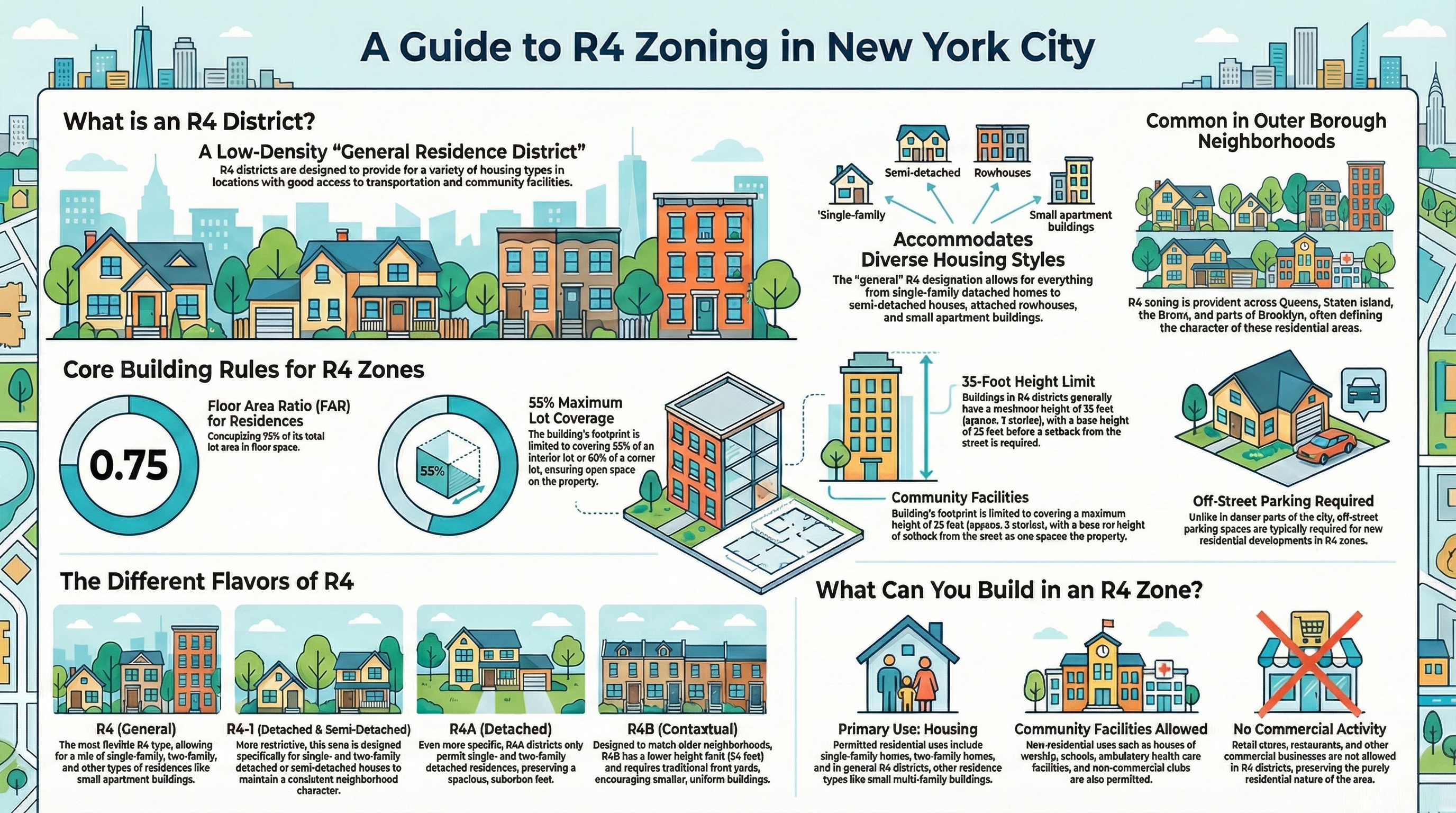
As architects at Losai Studio, we frequently navigate New York City's complex zoning regulations, and R4 zoning is one we encounter regularly in our residential projects. Whether you're a developer, homeowner, or simply curious about what can be built in certain neighborhoods, understanding R4 zoning is essential to unlocking a property's potential.
What is R4 Zoning in New York?
R4 is a low-density residential zoning district in New York City, part of the broader "contextual" zoning framework designed to preserve neighborhood character while allowing for thoughtful development. R4 districts are typically found in outer borough neighborhoods where single-family homes, small apartment buildings, and attached row houses dominate the streetscape.
The "4" designation indicates moderate density compared to R1-R3 zones (lower density) and R5-R10 zones (higher density). R4 zoning strikes a balance between maintaining residential character and accommodating urban growth.
What Can You Build in R4 Zones?
R4 zoning permits several building types, making it relatively flexible for residential development:
Detached single-family homes remain the most common use, with specific setback and yard requirements that create breathing room between structures.
Semi-detached and attached row houses are also permitted, allowing for more efficient land use while maintaining a human scale. These are particularly popular in Brooklyn and Queens neighborhoods where traditional row house architecture defines the streetscape.
Small multifamily buildings with multiple dwelling units can be developed, though the number of units is limited by Floor Area Ratio (FAR) regulations, which we'll discuss shortly.
Key R4 Zoning Regulations
At Losai Studio, we pay close attention to several critical parameters when designing within R4 districts:
Floor Area Ratio (FAR): In most R4 districts, the FAR is 0.75, meaning you can build up to 75% of your lot size in total floor area. For example, on a 5,000-square-foot lot, you could construct a building with 3,750 square feet of floor area across multiple levels.
Height Limitations: R4 zones typically allow buildings up to 35 feet in height, which generally accommodates two to three stories. This height limit helps maintain the low-rise character of residential neighborhoods.
Lot Coverage: The percentage of your lot that can be covered by buildings varies, but typically ranges from 55-65% in R4 districts, ensuring adequate open space for yards and landscaping.
Setback Requirements: Front, side, and rear yard setbacks are mandated to create visual breathing room and privacy between properties. These requirements vary based on specific R4 subcategories and lot dimensions.
Parking Requirements: Depending on the number of units and location, off-street parking may be required, which can significantly impact site design and project economics.
R4 Variants: Understanding the Subcategories
Like many NYC zoning districts, R4 has several contextual variants:
R4-1 allows the highest density within the R4 family, with buildings potentially reaching the maximum FAR and height limits.
R4A and R4B are contextual districts with stricter height and setback requirements designed to match existing neighborhood patterns. These variants often require ground-floor setbacks and limit overall building height to two or three stories.
Design Opportunities in R4 Zones
From our experience at Losai Studio, R4 zoning offers exciting opportunities for thoughtful architectural design. The regulations encourage creative solutions that respect neighborhood context while maximizing livable space.
Modern townhouse developments can incorporate innovative layouts, sustainable features, and contemporary aesthetics within the traditional row house typology. We've designed R4 projects that blend seamlessly with historic streetscapes while offering open-plan interiors, rooftop terraces, and garden-level living spaces.
Small multifamily buildings in R4 zones allow developers to create intimate residential communities with 4-8 units, perfect for rental or condominium developments that maintain neighborhood scale.
Adaptive renovations of existing structures can transform underutilized properties into high-value residences by maximizing allowable floor area and adding modern amenities within the zoning envelope.
Navigating R4 Zoning for Your Project
Successfully developing in an R4 zone requires careful analysis of your specific lot conditions, understanding applicable subcategory rules, and working with experienced architects who know how to optimize designs within regulatory constraints.
At Losai Studio, we begin every R4 project with a thorough zoning analysis, examining lot dimensions, existing structures, and neighborhood context to identify opportunities and constraints. Our designs balance regulatory compliance with architectural innovation, ensuring projects are both legally sound and aesthetically compelling.
Whether you're planning a custom single-family home, a boutique multifamily development, or renovating an existing structure, R4 zoning offers significant flexibility for creating beautiful, functional residential spaces that contribute positively to New York City's diverse neighborhoods.
Getting Started Renovating an R4-zoned property in New York
If you're considering a project in an R4-zoned property, we recommend consulting with an experienced architectural firm early in the process. Understanding what's possible under R4 regulations can help you make informed decisions about property acquisition, project scope, and budget.
At Losai Studio, we've successfully delivered numerous residential projects across NYC's varied zoning districts, bringing creative vision and technical expertise to every endeavor. Our comprehensive approach ensures that your project not only meets regulatory requirements but exceeds your expectations for design quality and functionality.
Interested in exploring what's possible with your R4-zoned property? Contact Losai Studio to discuss how we can transform your vision into reality.

LOSAI STUDIO