The Rise of Mass Timber Townhouses: Why Wood is Making a Comeback in Urban Living
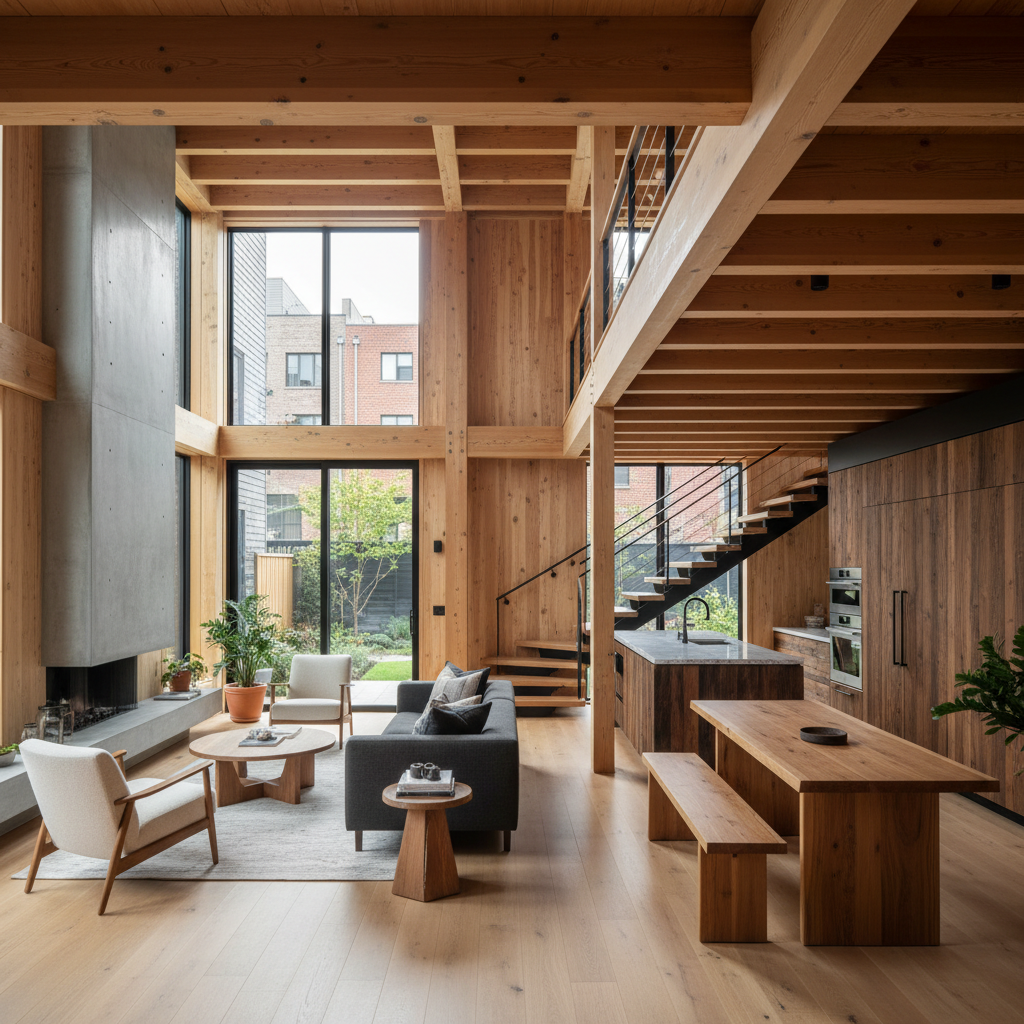
Timber Townhouses!
Forget the old lumberyard associations. We're not talking about your grandpa's rickety shed. Picture, instead, the sleek lines of modern design, the warmth of natural materials, and the quiet hum of sustainability. This is the realm of mass timber, the engineered wood revolution poised to redefine urban living, one townhouse at a time. What exactly is mass timber? Think of enormous, meticulously crafted wood panels and beams, engineered to rival, and even surpass, the strength of their steel and concrete counterparts. And why townhouses? Their scale, their density, and their inherent connection to the urban fabric make them the perfect canvas for this woody renaissance. Let's explore why these woody wonders are making a comeback in urban design.
A Walk Through the Woods of Time: Timber's Ancient Roots
To understand the fervor surrounding mass timber, it's vital to recognize this isn't some novel, untested fad. Wood has been the bedrock of human shelter for millennia. Envision Neolithic longhouses, sheltering entire communities, or the intricate "half-timbered" houses of medieval Europe, testaments to wood's enduring charm and structural integrity. Then came the Industrial Revolution. Steel and concrete, symbols of modernity and perceived strength, ascended, relegating wood to the periphery, to smaller, less "important" structures. But history, as they say, often rhymes. The late 20th century witnessed the genesis of engineered wood products, the likes of Cross-Laminated Timber (CLT) and Glulam, effectively initiating the "mass timber renaissance." We are now returning to timber, but with the advantage of modern science.
The "Mass Timber Magic": What Makes it So Special?
What precisely imbues mass timber with its "magic?" It boils down to a confluence of factors, starting with sheer engineering ingenuity. Forget your average 2x4s; we're in the realm of Cross-Laminated Timber (CLT), Glulam, Nail-Laminated Timber (NLT), and Dowel-Laminated Timber (DLT). These aren't just stronger; they're dimensionally stable, predictable, and surprisingly versatile. But the allure goes beyond mere strength.
Consider the environmental implications. Trees, in their very essence, are carbon sequestering machines. Mass timber takes this a step further, locking that carbon away for the building's lifespan, resulting in a significantly lower carbon footprint compared to concrete and steel. Then there's the renewability aspect. Sourced from sustainably managed forests, mass timber represents a truly renewable resource, a stark contrast to the finite nature of its conventional competitors.
Furthermore, these structures are built to last. Their performance during seismic events is remarkable, and their behavior in fires is surprisingly predictable. Mass timber chars slowly, forming a protective layer that insulates the core, often outperforming steel in prolonged fire exposure. The construction process itself is revolutionized. Think of it as grown-up LEGOs! Prefabricated components lead to faster on-site assembly, reduced waste, and minimized noise pollution, a boon for dense urban environments.
And let's not forget the aesthetic dimension. Exposed wood interiors exude warmth and create a connection to nature, tapping into the principles of biophilic design. Moreover, wood offers excellent insulation and sound dampening properties, further enhancing the comfort and tranquility of urban living.
Townhouses Taking Off: Where Mass Timber is Making its Mark Now
The mass timber movement is no longer a fringe phenomenon. Projects are proliferating, particularly in North America and Europe. Building codes are evolving, albeit at varying paces, to accommodate taller timber structures, opening avenues for townhouse construction. Consider the example of the historic Brooklyn carriage house, reborn as a modern mass timber home, a testament to the material's adaptability. Or the modular CLT townhouses in Seattle, streamlining construction and minimizing disruption. And there are even prototype townhomes that address affordability challenges with innovative timber construction. Moreover, public sentiment is largely positive. People are drawn to the aesthetic appeal, the construction efficiency, and the inherent green credentials of mass timber.
The Elephant in the (Wooden) Room: Challenges and Heated Debates
Of course, no revolution comes without its challenges, and mass timber is no exception. The initial price tag can be daunting, often exceeding that of traditional materials due to a still-developing supply chain. While faster construction can offset some of these costs, it's not always a guaranteed advantage.
Then there's the perennial fear: "Wood burns!" While engineered mass timber chars predictably, offering a degree of fire resistance often superior to steel, smoke remains a concern, necessitating robust fire suppression systems.
The relationship between wood and water is another critical consideration. Moisture can lead to mold, rot, and pest infestations, underscoring the importance of meticulous planning and protective measures.
And what about height? Is there a "sweet spot" for mass timber construction? Some argue its strengths are best realized in the 5-15 story range, rather than pushing the boundaries of skyscraper design.
Further complicating matters is the existing skills gap and the labyrinthine nature of building regulations. Finding experienced construction crews and navigating varying code requirements can be a considerable hurdle.
Finally, acoustics. While wood offers inherent sound dampening qualities, bare timber panels may require additional acoustic layers to ensure peaceful coexistence with townhouse neighbors.
Building Tomorrow: The Exciting Future of Timber Townhouses
Looking ahead, mass timber's trajectory points towards mainstream adoption. We can anticipate increased financial incentives and carbon offset programs to further encourage its use. Its inherent efficiency and potential cost-effectiveness offer a pathway towards more affordable and accessible housing. The future holds a wealth of innovation, from hybrid systems and advanced manufacturing techniques (including 3D printing!) to continuous product development. Building codes will continue to adapt, streamlining the approval process for mass timber construction. And a growing industry will drive demand for skilled professionals in design, prefabrication, and installation.
A New Era for Urban Homes
Mass timber townhouses represent more than just a fleeting trend; they embody a profound shift towards more sustainable, efficient, and aesthetically pleasing urban environments. From the ancient forests to the cutting-edge engineering of today, wood is reaffirming its enduring value in shaping the future of our cities.
Contact Us for a Free Consultation

LOSAI STUDIO