The Future of Restaurant Design: Trends to Watch in 2026 and Beyond
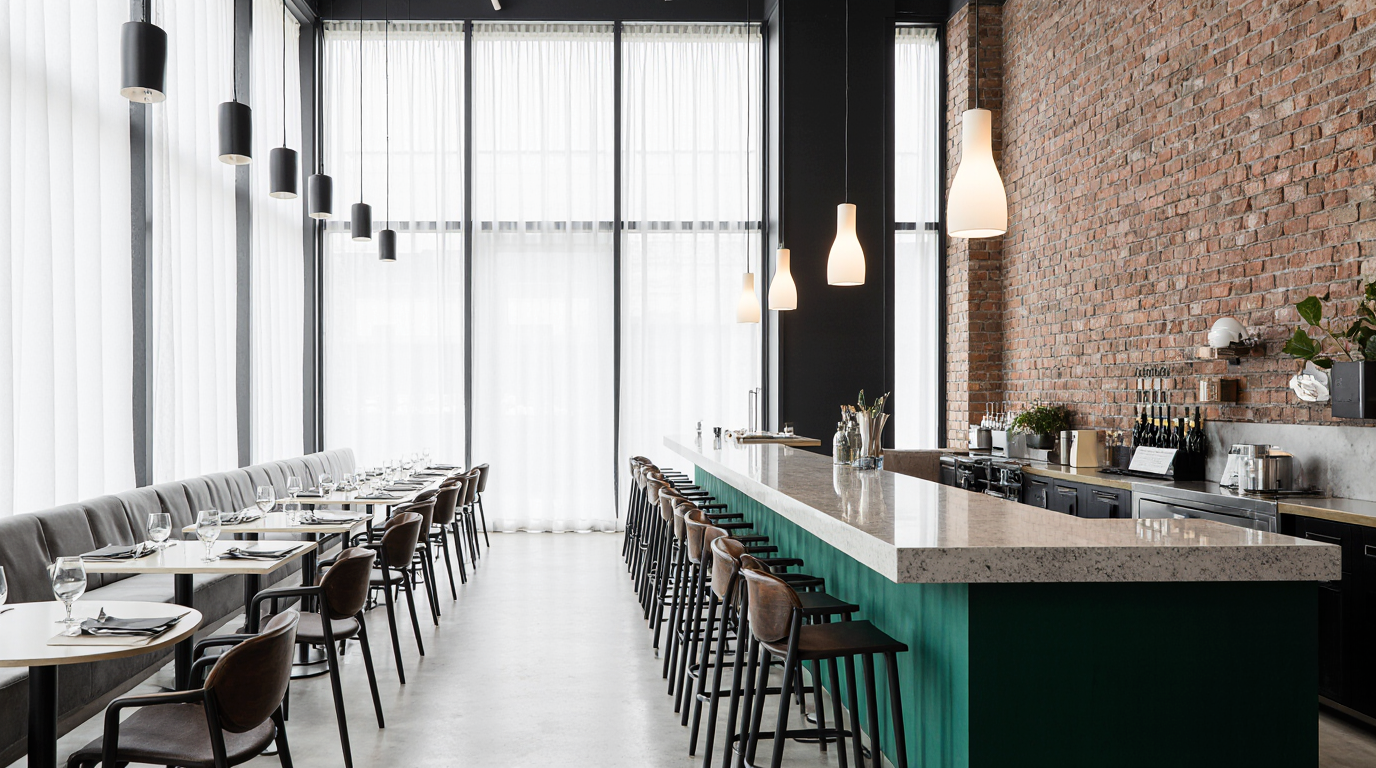
We project the evolution of restaurant design by 2030, focusing on key trends that will redefine the dining experience, operational efficiency, and sustainability, particularly within the context of New York City. The core of future restaurant design lies in creating smart, sustainable, flexible, and intensely experiential spaces that optimize operations and engineer unforgettable moments.
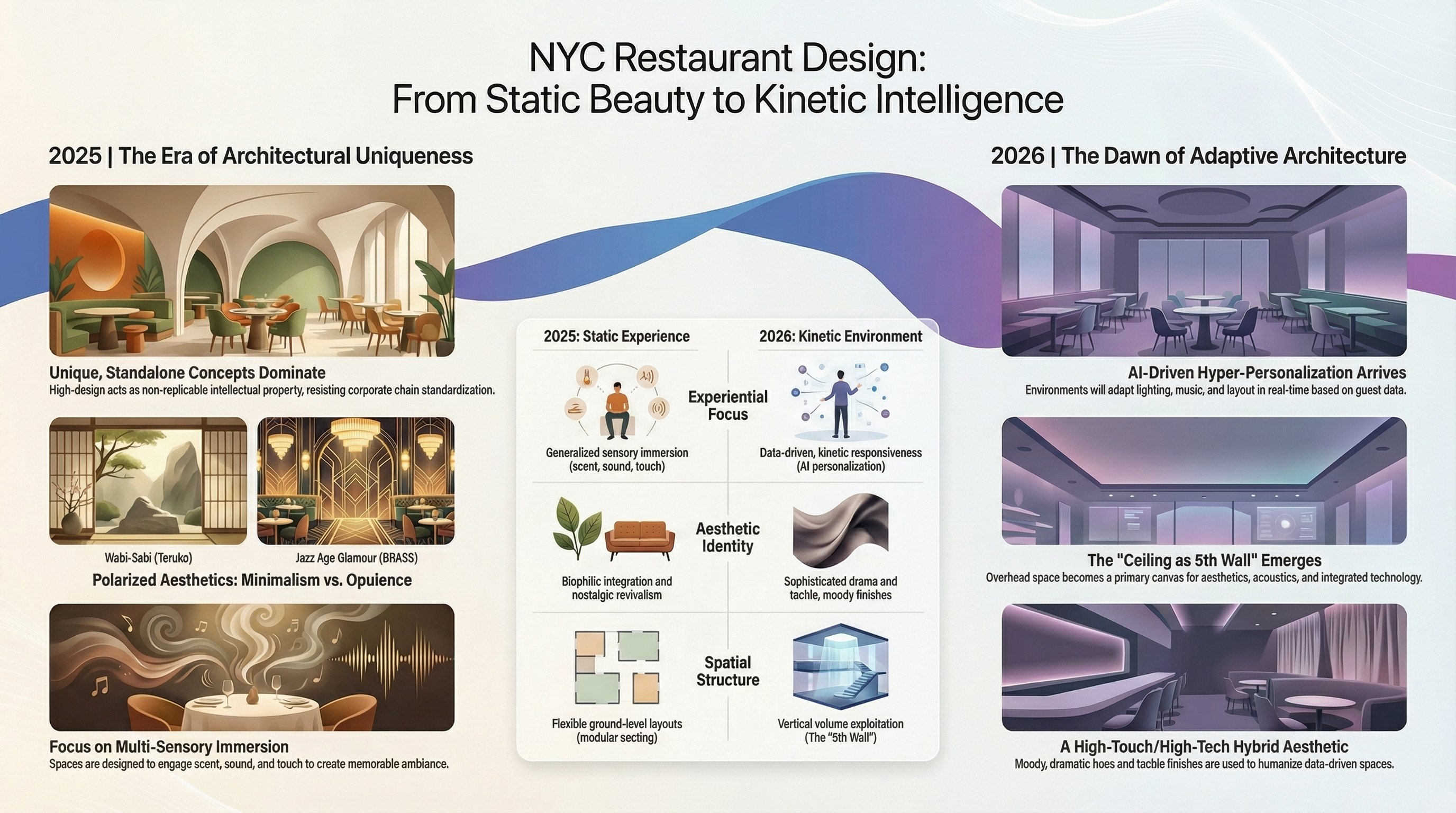
The Intelligent Eatery: AI and IoT Integration
Technology will be intrinsically integrated into restaurant design and operations, creating "smart restaurants" characterized by efficiency and personalization.
Seamless Ordering & Hyper-Personalization:
Smart Interactions:
Traditional paper menus will be replaced by digital, interactive tables, voice-activated ordering, and self-service kiosks. These systems will integrate with personal AI assistants to remember guest preferences, dietary needs, and past orders, acting as digital "sommeliers."
AI-Driven Recommendations:
AI algorithms will provide tailored menu suggestions, predict demand for dynamic pricing, and offer wine pairings based on individual palates, enhancing guest experience and loyalty.
Contactless Convenience:
Designs will prioritize hygienic and efficient transactions through QR code menus and contactless payment systems, reflecting post-pandemic consumer expectations.
Smart Kitchens &Operational Efficiency:
IoT-Enabled Appliances:
Back-of-house operations will utilize Internet of Things (IoT) devices in ovens, grills, and refrigerators to optimize cooking consistency and reduce errors.
Robotics in the Kitchen:
Robotic chefs (e.g., Miso Robotics' Flippy) will handle repetitive tasks like flipping burgers, frying, and sushi preparation with precision and speed. Kitchen layouts will evolve to accommodate these mechanical systems, a critical consideration in space-limited NYC.
AI-Powered Inventory & Waste Reduction:
AI systems will analyze sales data, predict demand, and automate inventory management, integrating with POS systems to optimize ingredient orders and significantly reduce food waste.
The Data-Driven Experience:
Dynamic Environments:
AI will control custom lighting and acoustics, adapting the restaurant's ambiance in real-time based on time of day, guest demographics, or events.
Optimizing Every Touchpoint:
AI will provide insights for data-driven decision-making in areas like table management and employee scheduling, ensuring operational excellence and ROI.
Beyond the Four Walls: Flexible Spaces & Off-Premise Dining
The traditional restaurant model is expanding, with significant growth projected from off-premise dining by 2030. This necessitates a reevaluation of space utilization and operational flow, especially in space-constrained NYC.
Designing for Duality: Dine-in, Takeout, and Delivery:
Modular & Adaptable Layouts:
Interiors will feature modular furniture and reconfigurable layouts to accommodate different group sizes, private events, or shifts between full-service and quick-service setups.
Dedicated Off-Premise Zones:
Essential elements will include dedicated pickup areas, separate entrances for delivery drivers, and optimized waiting zones for mobile orders to reduce congestion and streamline operations.
Kitchen Layouts Reimagined:
Kitchens will be designed for parallel preparation to efficiently handle both dine-in and high-volume takeout/delivery requests without compromising quality or speed.
The Ghost Kitchen Phenomenon & Hybrid Models:
Virtual Restaurants Take Center Stage:
Ghost kitchens and virtual restaurants, with lower real estate costs, will focus on digital visibility. The ghost kitchen market is projected to reach $1 trillion globally by 2030.
Hybrid Models for Maximum Reach:
Existing restaurants will adopt hybrid models, integrating counter service, full-service dining, takeout, delivery, and meal kits to diversify revenue streams and cater to varied consumer preferences.
NYC Real Estate Navigations:
Designing efficient, multi-purpose spaces that comply with Department of Buildings codes and zoning regulations is crucial for making these concepts viable in a dense urban environment.
Dining as a Destination: Hyper-Immersive Experiences
Consumers, particularly Gen Z and Millennials, seek authentic, memorable experiences. Restaurants in 2030 will become theatrical stages, transporting diners beyond their plates.
Crafting Unforgettable Narratives:
Sensory Storytelling:
Hyper-immersive dining will involve meticulously orchestrated productions using themed interiors, custom lighting, dynamic music, and ambient scents to evoke emotions and tell a story about the cuisine or concept.
Interactive Elements:
Open kitchens will become performance stages, digital art installations will react to diners, and tables may feature interactive projections, blurring dining with performance art.
Evoking Emotion:
Design details, from seating texture to light flow, will be considered to craft an emotional journey and build a deeper connection with the meal.
The Role of AR/VR and Projection Mapping:
Virtual Voyages:
Augmented Reality (AR) and Virtual Reality (VR) will be integrated for virtual dining environments, allowing diners to see animated plating or explore ingredient origins.
Dynamic Visual Feasts:
Projection mapping will transform dining tables and walls into evolving landscapes, creating visual narratives that complement each course, with increasing sophistication and integration into overall design.
The Psychology of Ambiance:
Light, Sound, Scent:
Custom lighting schemes, soundscapes, and bespoke scent combinations will be used as fundamental design tools to influence perception and create a cohesive, unforgettable atmosphere.
Beyond Instagrammable:
The focus will be on creating authentic content and emotional connections that foster genuine delight, encouraging repeat visits beyond mere photo opportunities.
The Green Palate: Sustainable Design as Standard Practice
Sustainability will be a non-negotiable expectation and a critical component of responsible design. Restaurants in 2030 will embody eco-conscious principles.
Materials with a Conscience:
Eco-Friendly Sourcing:
Standard practice will include reclaimed wood, recycled metals, cork flooring, bamboo, and low-VOC paints, chosen for their environmental footprint and durability.
Local Culture & Artistry:
Design will highlight regional artistry and traditions through locally sourced materials and artisanal furnishings, supporting local economies and reducing transportation impact.
Energy Efficiency & Waste Reduction:
Smart Energy Management:
Energy-efficient LED lighting, smart thermostats, and high-efficiency HVAC systems will reduce energy consumption and operational costs.
Zero-Waste Aspirations:
Restaurants will embrace comprehensive waste reduction programs, including extensive composting, partnerships with food banks, and the elimination of single-use plastics. Kitchens will be designed for waste segregation and processing.
Biophilic Design & Outdoor Expansion:
Bringing Nature Indoors:
Green spaces, living walls, and maximized natural light will enhance aesthetics, improve air quality, and create calming atmospheres, connecting diners with nature.
Year-Round Outdoor Dining:
Outdoor dining spaces will be designed for year-round comfort with retractable roofs, integrated heating/cooling, and enhanced landscaping, with clever integration into urban environments and adherence to NYC zoning regulations.
The future of restaurant design is complex and full of potential. For owners and developers in NYC, navigating these trends requires a strategic partner understanding industry nuances, the city's pulse, and visionary project execution. The firm specializes in concierge-style service, guiding clients through vision, NYC Department of Buildings, and zoning approvals to create inspiring, practical spaces that strengthen brand identity and deliver long-term ROI.
FAQ Section
AI Restaurant Impact by 2030▼
AI will be integrated into customer-facing services (personalized recommendations, voice ordering) and back-of-house operations (smart kitchens, inventory management, staff scheduling).
Role of Robotics▼
Robotics will become standard for repetitive kitchen tasks (flipping burgers, frying, bartending), improving precision and speed. Kitchen designs will adapt to accommodate these systems.
Hyper-Immersive Dining▼
This entails multi-sensory experiences engaging sight, sound, smell, touch, and taste to tell a story. Technologies like AR/VR and projection mapping will create virtual environments and dynamic visual storytelling, complemented by custom lighting, soundscapes, and scents.
Sustainable Design▼
It will be foundational, using eco-friendly materials, energy-efficient systems, robust waste reduction programs, and biophilic elements.
Ghost Kitchens vs. Dine-in
Ghost kitchens will be a significant part of the industry, focusing on off-premise dining. Traditional restaurants will adopt hybrid models, offering both dine-in and robust takeout/delivery. Ghost kitchens complement, rather than replace, the experiential aspect of traditional dining.
LOSAI STUDIO