How to Make Your Tiny Restaurant Feel Twice as Big
Maximizing Space: Design Strategies for Small NYC Restaurants
Leo Sguera, an architect with over two decades of experience in NYC, emphasizes that spatial limitations can be opportunities for creative design. The core philosophy is that thoughtful design can make a small restaurant feel twice as large, enhancing both aesthetics and operational flow.
Key Design Strategies
Masterful Layouts & Seating for Spacious Flow:
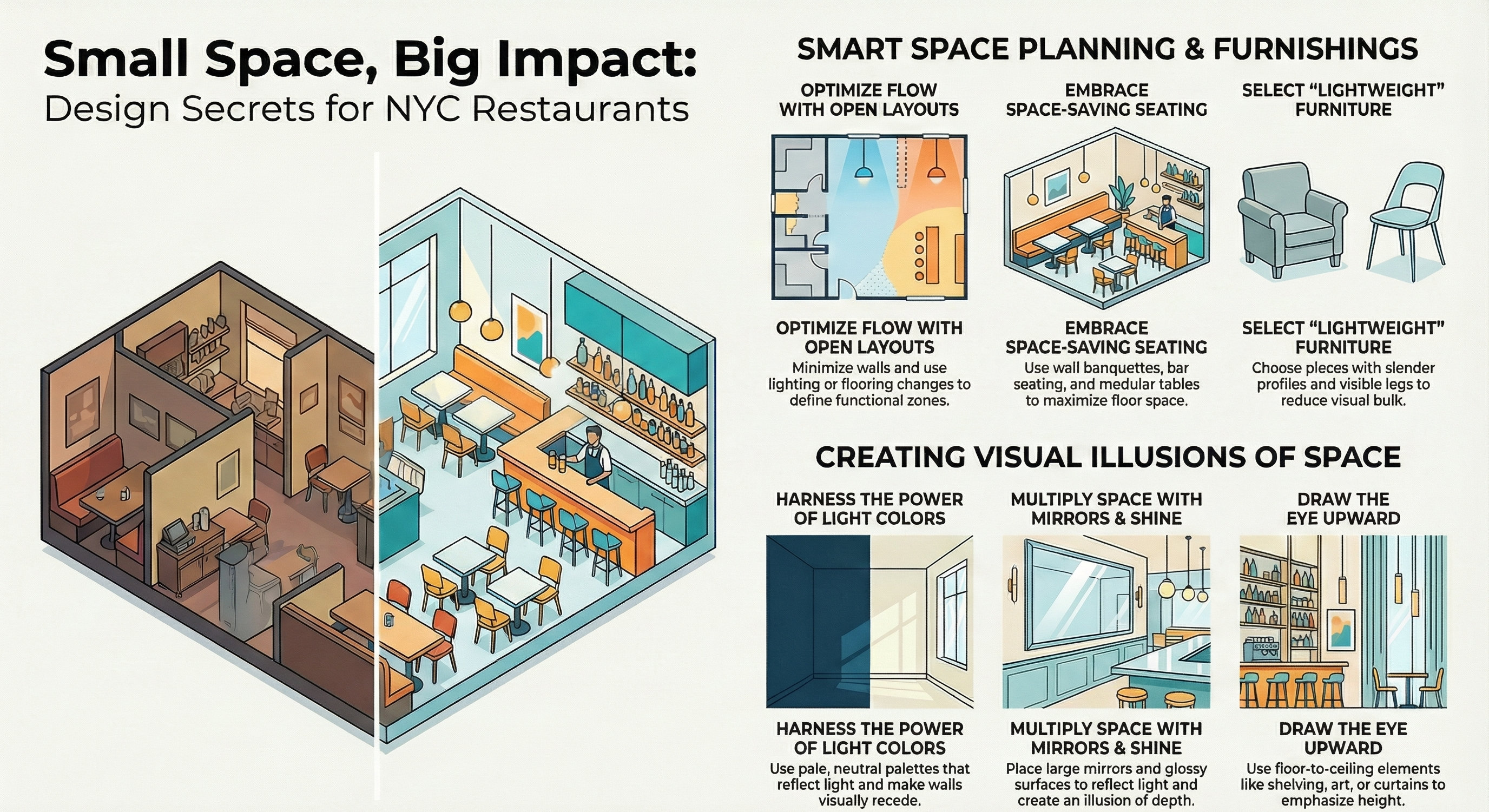
- Open Concept Philosophy: Minimizing barriers and walls creates uninterrupted visual flow, making the entire space feel larger and more dynamic. This can involve partially opening kitchens to dining areas.
- Zoning for Purpose: Subtly defining areas (dining, waiting, service) using different flooring materials or lighting changes, rather than physical walls, maintains an open feel while ensuring functional separation.
- Efficient Seating Arrangements:
- Banquette Seating: Built-in banquettes against walls save space, utilize linear areas, and create a cozy, luxurious feel, visually pushing walls out.
- Flexible & Modular Furniture: Tables that can be easily combined and stackable chairs allow for adaptation to different group sizes and efficient storage.
- Bar Seating & Communal Tables: These are effective for social interaction and efficient space use, particularly in narrow areas or as focal points.
- Minimalist & Leggy Furniture: Furniture with slender profiles and visible legs reduces visual weight, allowing light and sightlines to pass through, making the room feel airier.
- Optimized Traffic Paths: Clear, unobstructed pathways for customers and staff are crucial to prevent bottlenecks, reduce accidents, and ensure a comfortable guest experience.
Light, Color, and Reflection as Design Allies:
- The Power of Light Hues:
- Pale & Neutral Palettes: Light, cool colors (soft blues, gentle greens, muted greys, crisp whites) reflect light, making walls recede and visually expanding boundaries.
- Monochromatic Schemes: Using varying shades of a single light color creates subtle depth and texture without visual clutter.
- Strategic Lighting Design:
- Maximizing Natural Light: Unobstructed windows and light-colored, sheer window treatments are essential.
- Layered Lighting: Combining ambient, task, and accent lighting creates depth and prevents dark corners that shrink a space.
- Uplighting & Wall Washing: Directing light upwards or onto walls makes ceilings appear higher and walls more expansive.
- The Mirror Effect:
- Placement & Scale: Large mirrors strategically placed opposite windows or in narrow areas reflect light and views, blurring interior lines and creating illusions of extended space.
- Mirror Walls & Panels: Mirrored surfaces can seamlessly extend spaces and erase boundaries.
- Glossy Surfaces: Reflective materials like polished concrete floors, glass tabletops, or high-gloss paint bounce light around, increasing brightness and making the space feel more open.
3. Vertical Design & Curated Views:
- Embrace the Height:
- Floor-to-Ceiling Elements: Tall shelving units, art installations, or drapery emphasize verticality and make rooms feel more expansive.
- Vertical Gardens & Greenery: Living walls or tiered planters draw the eye upwards, adding natural spaciousness without sacrificing floor space.
- Strategic Focal Points:
- Accent Walls: A unique texture, bold wallpaper, or striking art piece creates a captivating focal point, drawing attention away from the room's size.
- Curated Art: Large-scale artwork or murals can create a sense of expansiveness and visually transport diners.
- Open Shelving & Display:
- Practical Storage & Decor: Open shelves provide functional storage and aesthetic display opportunities, avoiding visual clutter from bulky cabinets.
- Showcasing Product: Ideal for retail elements, open shelving artfully displays merchandise.
- Window Views & Borrowed Scenery: Maximizing unobstructed window views blurs indoor/outdoor lines. If external views are poor, create internal "vistas" with art or architectural features.
4. Smart Furnishings & Functional Flair:
- Scaled for Success:
- Proportionality: Choose furniture appropriately sized for the space to avoid overwhelming it.
- Streamlined Silhouettes: Opt for furniture with slender profiles, clean lines, and minimal ornamentation.
- Multi-functional Marvels:
- Built-in Storage: Banquettes with lift-up seats or drawers provide discreet storage.
- Fold-down & Stackable Furniture: Allows for quick reconfiguration of space for different needs.
- Open Kitchen Advantage:
- Beyond Cooking: Blurs lines between front and back of house, extending perceived footprint and adding entertainment.
- Efficiency & Connection: Encourages compact kitchen layouts and streamlines staff movement, while engaging diners.
- Ingenious Storage Solutions:
- Vertical Storage: Tall, narrow shelving units maximize storage without consuming floor space.
- Under-counter & Hidden Storage: Custom cabinetry integrated into banquettes or under counters provides discreet storage.
- Material Matters: Lightweight metals, acrylic, and glass allow light to pass through, reducing visual weight and contributing to an airy feel.
Expert Consultation for NYC Spaces
Leo Sguera's firm specializes in navigating NYC space challenges, offering consultations to transform small restaurants into profitable, vibrant ventures.
Contact Us for a Free Consultation
FAQ Section Highlights
Budget-Friendly Impact:
Mirror placement, light paint colors, maximizing natural light, and vertical space utilization are key. Reclaimed materials add character affordably.
Spacious Paint Colors:
Light, cool colors like soft blues, light greens, muted greys, and crisp whites are recommended for their light-reflecting properties.
Seating Maximization:
Banquettes, flexible furniture, communal tables, and bar seating are efficient. Clear pathways (at least 36 inches wide) are essential.
Open Kitchen Suitability:
Open kitchens can make small spaces feel larger by extending perceived footprint and adding entertainment, while encouraging efficient layouts.
Common Mistakes:
Overcrowding, dark colors, blocking natural light, neglecting vertical space, and failing to define traffic paths are to be avoided. "Less is often more" is a guiding principle.

LOSAI STUDIO