A More Intentional Way of Living
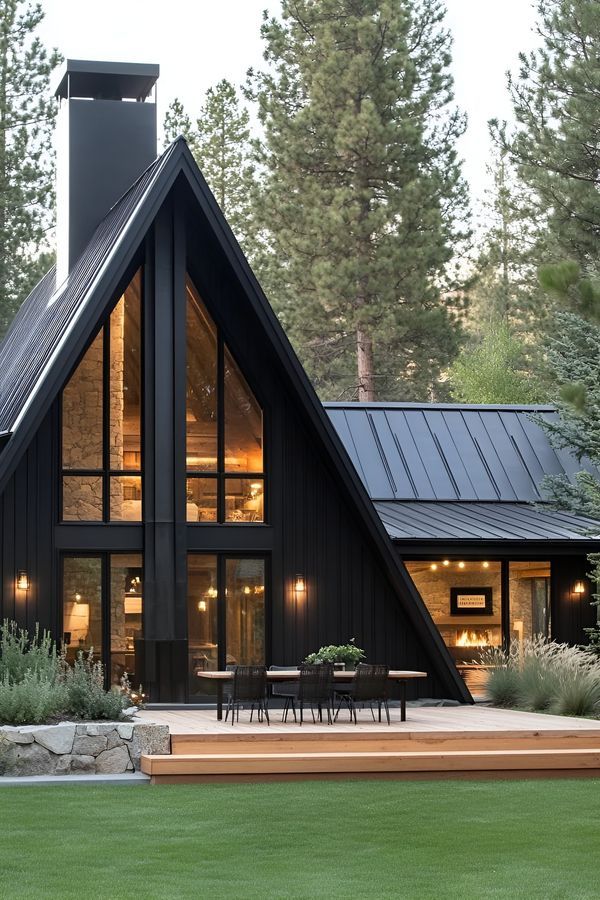
At Pivotal Moments, the Home Must Evolve
There are seasons in life when something subtle begins to feel misaligned.
The children are older. The house is quieter.
Or the opposite — life has become louder, faster, more demanding than ever imagined.
Or two careers have accelerated at once, and home has become little more than a place to recover between obligations.
At these inflection points, many people reach the same quiet realization:
their home no longer supports the life they want to live.
The Home as It Was — and the Home as It Needs to Be
Homes are often designed for who we were.
Young families build for growth and energy.
Early success favors visibility and scale.
Urban life rewards proximity and pace.
But over time, priorities shift.
Connection becomes more important than square footage.
Calm becomes more valuable than spectacle.
Privacy, light, and landscape begin to matter in deeper ways.
The question becomes less about what a home looks like — and more about how it feels.
Designing for the Next Chapter
Architecture has the ability to respond to these transitions with intention.
For empty nesters, this may mean reshaping oversized rooms into spaces that feel intimate and purposeful. It may mean creating a guest suite that welcomes family back with warmth while allowing daily life to feel calm and manageable.
For parents in constant motion, it often means reducing friction — clearer circulation, durable yet refined materials, places for gathering that do not compete with places for retreat.
For professional couples balancing demanding careers, the shift can be even more fundamental: carving out spaces that protect quiet, soften light, and restore clarity at the end of a long day.
In each case, the goal is the same.
To create a home that supports the life ahead — not the life behind.
From Function to Restoration
A well-designed home does more than function efficiently.
It restores.
This may take the form of:
- A kitchen that anchors daily rituals rather than amplifies chaos
- A reading room positioned for morning light
- A transition from city intensity to interior calm
- A country residence shaped around landscape and stillness
When architecture is disciplined — spatially and financially — it reduces stress rather than adding to it. It allows time at home to feel expansive instead of compressed.
A More Intentional Way of Living
At pivotal moments, change does not require excess. It requires clarity.
The most enduring homes are not designed around trends or scale, but around rhythm — how mornings begin, how evenings unwind, how weekends gather, how solitude is protected.
When the home evolves with its owners, it becomes more than a structure.
It becomes a setting for a more intentional life.
LOSAI STUDIO