Designing a New York Loft: Essential Considerations

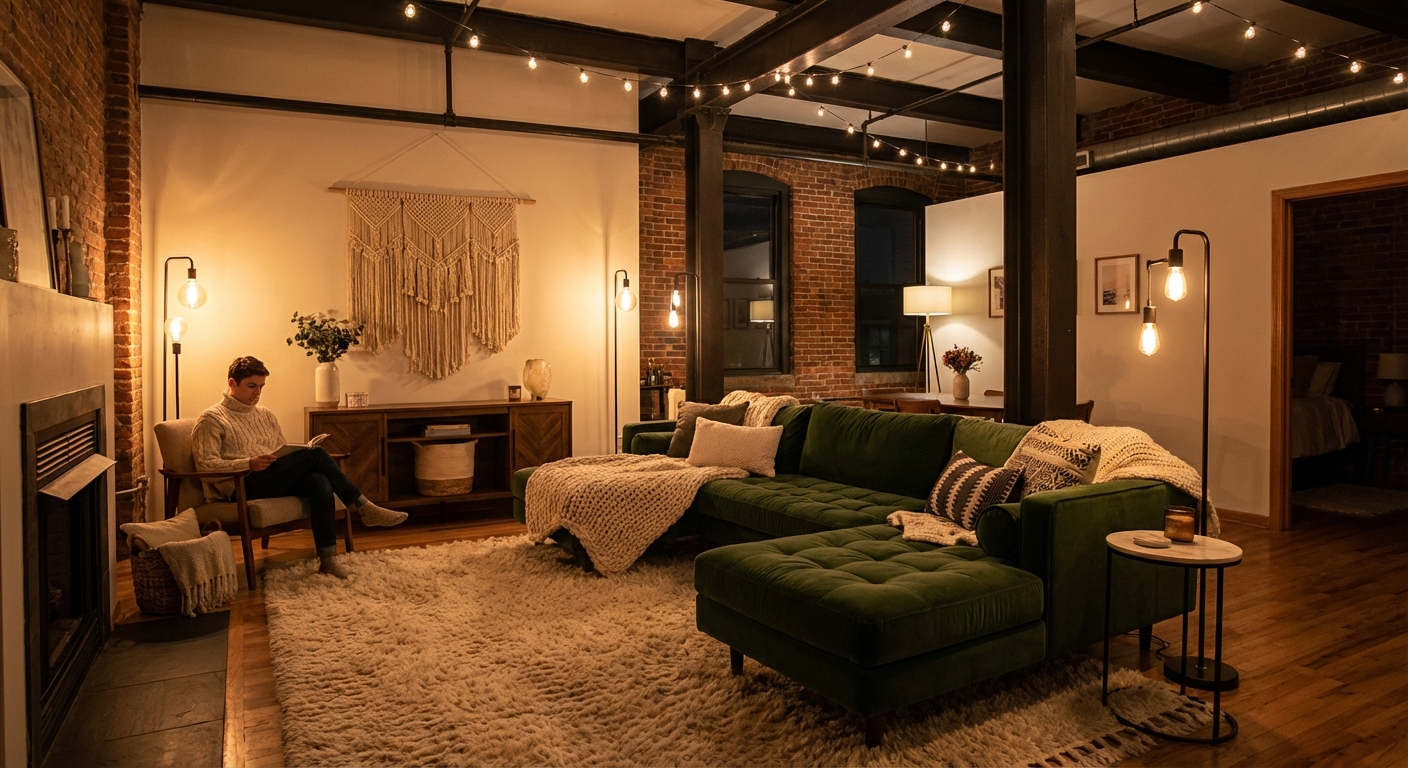
New York lofts are unlike any other residential typology. Born from former factories, warehouses, and commercial buildings, they offer volume, light, and material character that can’t be replicated in conventional apartments. But that openness comes with complexity.
Designing a successful loft requires more than aesthetic restraint—it demands technical fluency, legal awareness, and a deep understanding of how people live in large, uninterrupted space.
Below are the core architectural considerations that define thoughtful, enduring loft design in New York City.
What Makes a Loft a Loft
A true loft is not simply an open-plan apartment. It is a space shaped by its original industrial purpose.
Typical characteristics include:
- Large, uninterrupted floor plates
- Structural columns and beams
- High ceilings
- Oversized windows
- Minimal interior partitions
These elements create freedom—but also responsibility. Without conventional rooms to guide layout, every architectural decision must do more work: defining circulation, creating intimacy, and establishing hierarchy within openness.
Good loft design is less about filling space and more about shaping experience.
Light, Exposure, and Deep Floor Plates
Natural light is often assumed to be a given in lofts—but in reality, it is highly variable.
Many lofts have:
- Deep floor plates where light diminishes quickly
- Single-direction exposure
- Landmark-protected windows that cannot be altered
Architectural strategies often include:
- Organizing private spaces away from primary windows
- Borrowing light through glass partitions or transoms
- Designing interior rooms to accept shadow rather than fight it
In lofts, light must be composed—not just received.
Structure: Columns, Beams, and Load-Bearing Reality
Structural elements are among the most defining features of loft spaces—and among the least flexible.
Key realities:
- Columns are almost never removable
- Slabs limit where plumbing and penetrations can occur
- Exposed ceilings must coordinate sprinklers, lighting, and HVAC
- Structural modifications require engineering review and approvals
Rather than hiding structure, successful loft architecture integrates it—using columns to anchor layouts and beams to define zones without enclosure.
The best solutions treat structure as a given, not an obstacle.
Zoning, Use, and Legal Bedrooms
One of the most misunderstood aspects of loft living is what is legally permitted.
Important considerations include:
- Whether the building is zoned residential, commercial, or mixed-use
- What constitutes a legal bedroom under NYC code
- Minimum room sizes, ceiling heights, and egress requirements
- Window requirements for habitable rooms
Many iconic lofts cannot be reconfigured as freely as owners expect. Understanding these constraints early protects both the design and the investment.
Good architecture respects not just form—but regulation.
Acoustics and Privacy in Open Space
Open space amplifies sound. Concrete slabs, high ceilings, and minimal soft surfaces can create challenging acoustic environments.
Common strategies include:
- Layering public and private zones rather than fully separating them
- Using millwork, sliding panels, or partial-height partitions
- Incorporating absorptive materials discreetly
- Designing thresholds rather than hard divisions
Privacy in a loft is rarely about walls—it’s about sequencing, distance, and material intelligence.
Kitchens and Baths as Architectural Insertions
In lofts, kitchens and bathrooms are not simply rooms—they are interventions within a larger volume.
Key considerations:
- Wet-over-wet limitations and plumbing locations
- Venting constraints in older buildings
- Balancing visibility and discretion
- Treating kitchens as furniture rather than fixtures
The most successful loft kitchens and baths feel intentional but restrained—present without dominating the space.
Mechanical Systems: The Invisible Design Driver
Comfort systems quietly shape nearly every design decision in a loft.
Typical challenges include:
- Limited ceiling depth for ductwork
- Coordination of sprinklers, lighting, and HVAC
- Choosing between exposed and concealed systems
- Balancing aesthetics with thermal comfort
Decisions about mechanical systems should happen early. In lofts, they are architectural—not secondary.
Materials That Belong in a Loft
Lofts reward material honesty and restraint.
Materials that perform well over time include:
- Concrete and terrazzo
- Steel and blackened metal
- Natural wood with minimal finish
- Plaster and limewash surfaces
Rather than chasing trends, enduring lofts rely on materials that age gracefully and respond to light, wear, and time.
Common Loft Design Mistakes
Many lofts fail not from lack of budget—but from misinterpretation.
Frequent issues include:
- Over-partitioning open space
- Treating a loft like a traditional apartment
- Ignoring acoustics and storage
- Designing for images rather than daily life
Successful lofts feel effortless precisely because the complexity was addressed early.
When to Engage an Architect
The most impactful loft projects begin with architectural thinking before layouts are fixed or walls are drawn.
Early involvement allows for:
- Feasibility studies before purchase or renovation
- Code and zoning clarity
- Structural and mechanical coordination
- Smarter budgeting and fewer revisions
A thoughtful first conversation often determines the success of the entire project.
Designing for Longevity
A well-designed loft does not rely on novelty. It relies on proportion, light, material integrity, and clarity of intent.
At its best, loft architecture creates spaces that are calm, flexible, and deeply livable - spaces that evolve with their occupants while retaining their character.
Considering a loft renovation or purchase? We approach each project with a deep understanding of New York’s loft buildings—structurally, legally, and experientially. A preliminary discussion can clarify what’s possible before decisions become costly. Reach out for a complimentary feasibioltyi call today!
LOSAI STUDIO