New York City's Ubiquitous Scaffolding: Why is it everywhere?
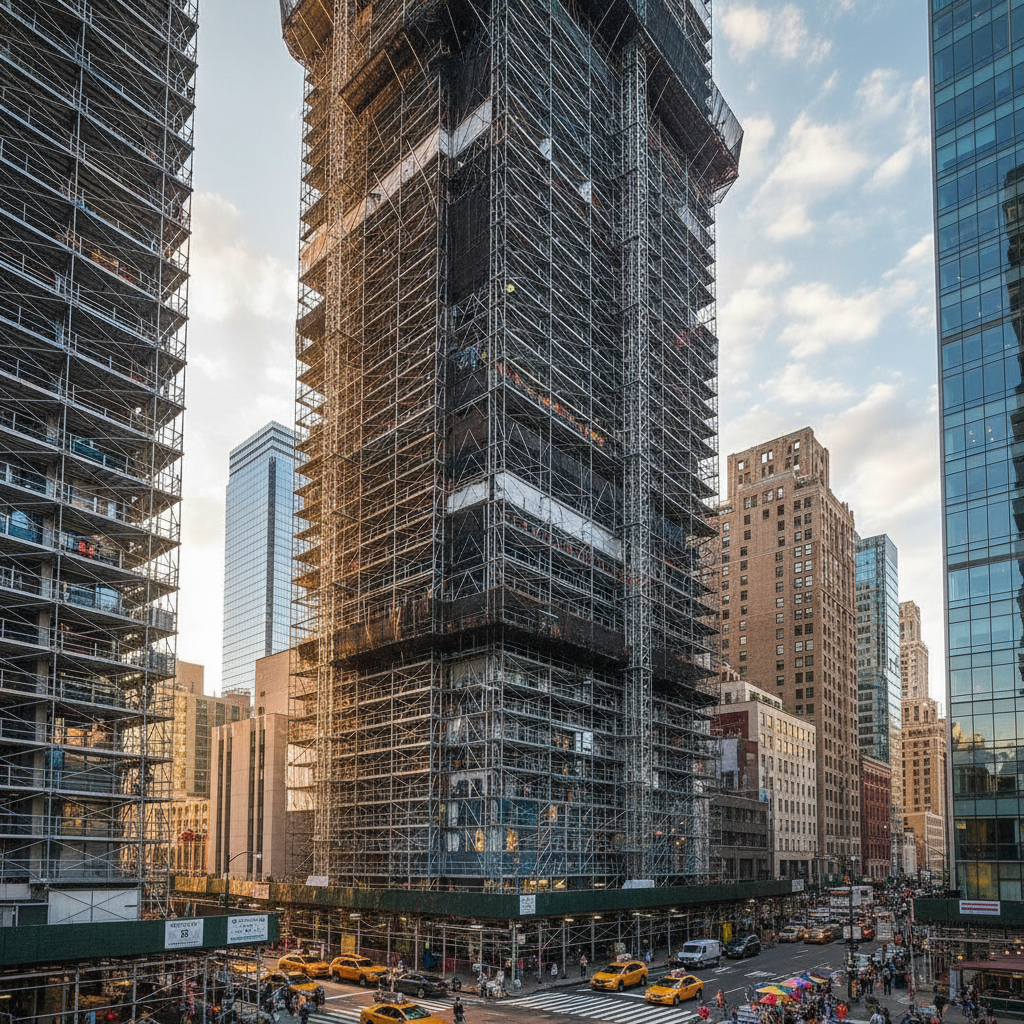
The scaffolding, often perceived as an urban blight, is presented as a critical element driven by safety mandates, the city's continuous evolution, and the age of its infrastructure.
The Unyielding Guardian: Local Law 11 and Façade Safety Mandates
The Façade Inspection and Safety Program (FISP), commonly known as Local Law 11, is identified as the primary driver for scaffolding in New York City. This law mandates that every building taller than six stories undergo façade inspections every five years.
- Inspection Cycle: A Qualified Exterior Wall Inspector (QEWI), a licensed architect or engineer, must conduct a thorough examination of the building's façade every five years. This includes close-up inspections from scaffolding and, in some cases, cavity wall probes.
- Classification of Conditions: Façades are classified into three categories:
- "Safe": No issues identified.
- "Safe With a Repair and Maintenance Program (SWARMP)": Requires a repair plan and completion within a specified timeframe (typically one to five years). Failure to address SWARMP conditions can lead to reclassification as "Unsafe."
- "Unsafe": Demands immediate erection of scaffolding, known as "sidewalk sheds," to protect pedestrians from falling debris. These sheds remain until all necessary repairs are completed and an amended report is filed with the NYC Department of Buildings (DOB).
A City Rebuilding Itself: Perpetual Development, Renovation, and Historical Preservation
Beyond regulatory requirements, New York City's constant state of flux necessitates scaffolding.
- Booming Construction and Renovation: The city experiences continuous new construction, luxury residential tower development, hotel modernizations, and extensive renovations in private residences. Each of these projects requires robust scaffolding for safe elevated work platforms and public protection from falling materials.
- An Aging Architectural Grandeur: Over 75% of NYC's buildings were constructed before 1960. These older structures, often featuring intricate stone or brick façades, require consistent maintenance, repointing, and specialized repairs. Scaffolding is essential for accessing and safeguarding these historic elements, from delicate cornices to mid-century windows.
The "Scaffold Law": Protecting Workers, Shaping Projects
New York State Labor Law Section 240, known as the "Scaffold Law," significantly influences scaffolding use by imposing absolute liability on property owners and contractors for gravity-related worker injuries.
- Absolute Liability: This law holds owners/contractors 100% responsible for injuries resulting from falls or falling objects if proper safety devices (scaffolds, hoists, harnesses) are not provided or are faulty, irrespective of worker fault.
- Worker Safety: The law emphasizes the critical need for compliant scaffolding and protective gear for any work performed at elevated heights.
- Impact on Planning and Budget: The stringent nature of the Scaffold Law increases construction costs and insurance premiums, necessitating meticulous project planning, adherence to OSHA standards, and thorough worker training.
The Lingering Question: Why Do the Sheds Stay So Long?
The extended duration of scaffolding is attributed to several complex factors:
- Complexity and Logistics of Repairs: Facade repairs on large, older buildings are intricate, often involving specialized materials, skilled labor, and unexpected structural issues. Obtaining DOB permits, coordinating contractors, and managing substantial budgets for these projects are time-consuming.
- Bureaucratic Hurdles and Funding: Navigating the DOB for permits and approvals can be a lengthy process. For building owners, especially co-ops and condos, securing funding for multi-million dollar repairs involves extensive financial planning and resident assessments.
- Economics of "Maintaining" Scaffolding: In some instances, paying monthly scaffolding rental fees can be more cost-effective for owners than expediting repairs or facing fines for inadequate public protection. The average lifespan of scaffolding in NYC has been reported to be over 500 days.
- "Get Sheds Down" Initiative: Mayor Eric Adams launched this initiative to accelerate repairs, improve shed design, tighten permit rules, impose stricter penalties for prolonged scaffolding, and support building owners in completing work more rapidly.
The Unseen Costs: Impact on Urban Life and Local Commerce
Despite their necessity, scaffolding has significant negative impacts on the city's vibrancy and economy.
- Aesthetic Blight and Obstructed Views: Scaffolding detracts from the city's iconic beauty, blocking views of architectural landmarks and creating visual clutter.
- Diminished Pedestrian Experience: Sidewalk sheds can create dark, narrow, and congested passages, making sidewalks feel unwelcoming and hindering foot traffic.
- Economic Impact on Businesses: Studies, including one commissioned by New York City in cooperation with Mastercard, indicate a significant negative financial impact on businesses operating beneath sidewalk sheds. Obscured storefronts, reduced visibility, and the inability to use outdoor seating lead to decreased foot traffic and substantial revenue drops. One pub owner reported a 20-25% decrease in sales due to obstructed visibility.
NYC Scaffolding
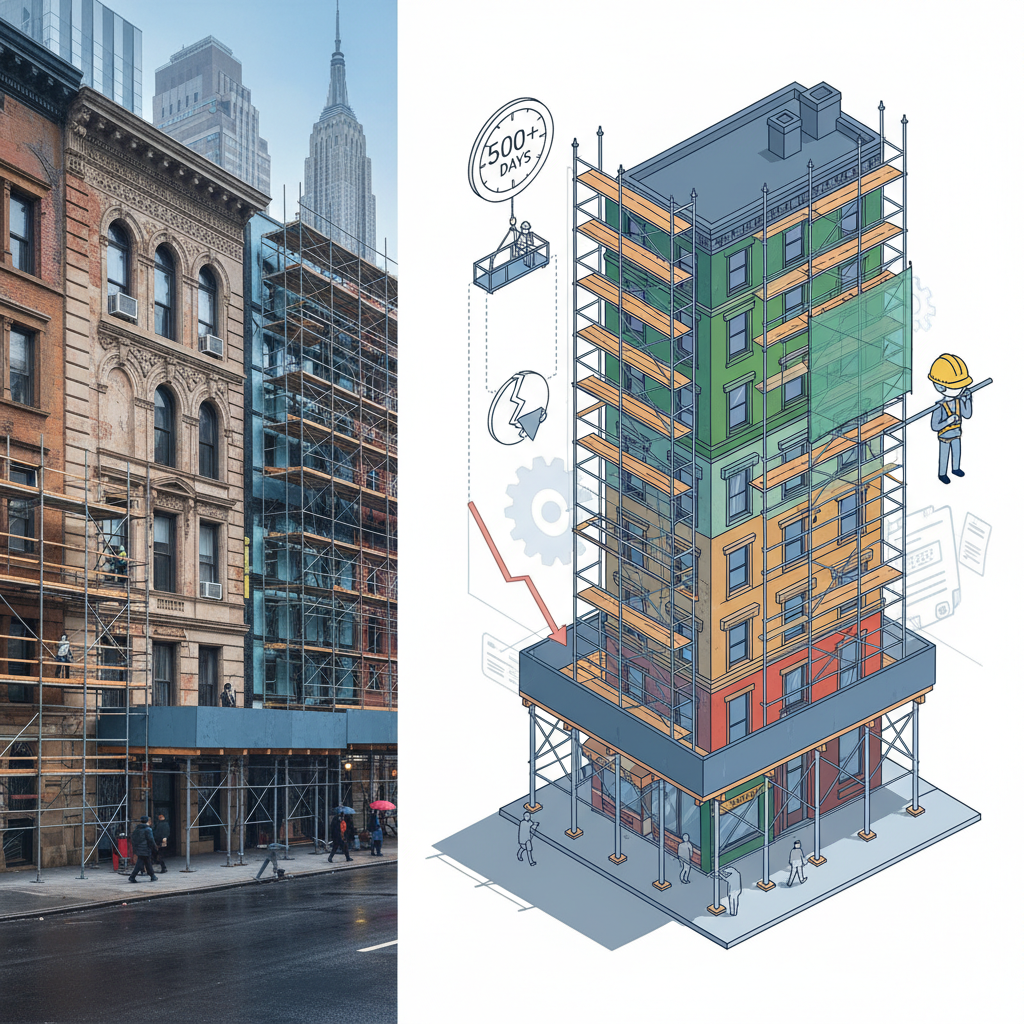
Scaffolding covering a building facade for inspection or repair.
A typical sidewalk shed providing protection for pedestrians.
Workers performing tasks on elevated scaffolding.
FAQ Section
Q1: What is Local Law 11, and how does it contribute to scaffolding in NYC?▼
Q2: What is the "Scaffold Law" (New York Labor Law Section 240)?▼
Q3: Why do some scaffolding structures stay up for so long in New York City?▼
Q4: What are the main types of scaffolding seen in NYC?▼
Q5: What are the economic impacts of prolonged scaffolding on NYC businesses?▼
Q6: Are there specific safety measures for scaffolding required by NYC regulations?▼
LOSAI STUDIO