Don't Start Your Restaurant Renovation Without This Checklist
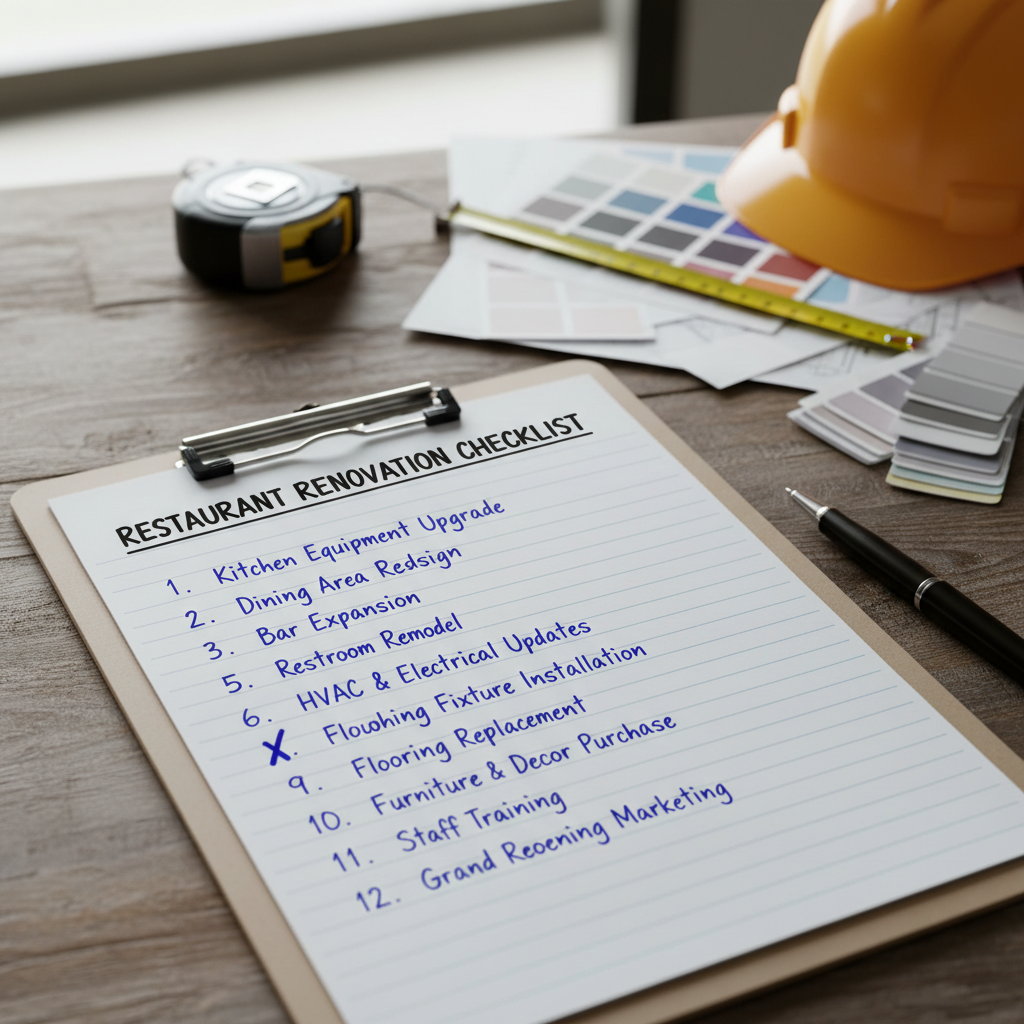
Restaurant Renovation in NYC: A Comprehensive Checklist for Success
This guide provides a detailed checklist for restaurant renovations in New York City, emphasizing strategic planning, budgeting, legal compliance, team assembly, design, and reopening strategies. Drawing on over two decades of experience in NYC's hospitality sector, the advice highlights the unique challenges and complexities of renovating in this demanding market.
Laying the Foundation: Strategic Vision & Master Plan
Before any physical work begins, a clear strategic vision is essential.
Define "Why" & "What" (Beyond Aesthetics):
- Identify core business goals: increased covers, enhanced brand identity, improved kitchen workflow, expanded menu, higher average check, or a complete rebrand.
- Conduct NYC-specific market analysis: understand the target demographic and competitive landscape, addressing evolving customer expectations and current trends (e.g., sustainability, immersive experiences).
- Refine the concept: ensure the renovation aligns with the restaurant's unique identity, whether it's a subtle refresh or a complete overhaul.
Scope & Scale Assessment:
- Cosmetic Updates: Less invasive changes like new furniture, lighting, decor, and paint.
- Major Structural Changes: Involve layout reconfigurations, kitchen expansion, moving utilities, or altering load-bearing walls, requiring significant permits and longer timelines.
- Prioritization: Identify non-negotiables for operational efficiency, safety, and compliance, and consider phasing less critical changes.
Initial Feasibility Study:
- Existing Conditions Assessment: Detailed evaluation of structural integrity, MEP (mechanical, electrical, plumbing) systems, and potential hidden issues in older buildings.
- Preliminary Budget Estimation: High-level cost analysis to align vision with financial reality.
The Cento Soldi Plan: Budgeting, Financing, & Timeline Mastery
Effective financial and temporal management is critical, especially in NYC.
Crafting Your Detailed Budget:
- Beyond Obvious Costs: Include design/architecture fees (10-15%), permit/application fees, demolition/debris removal, construction/labor, equipment, furniture/fixtures, utility upgrades (HVAC, plumbing, electrical), finishes/materials, inspections/consulting, and soft costs (legal, insurance, interim rent, marketing).
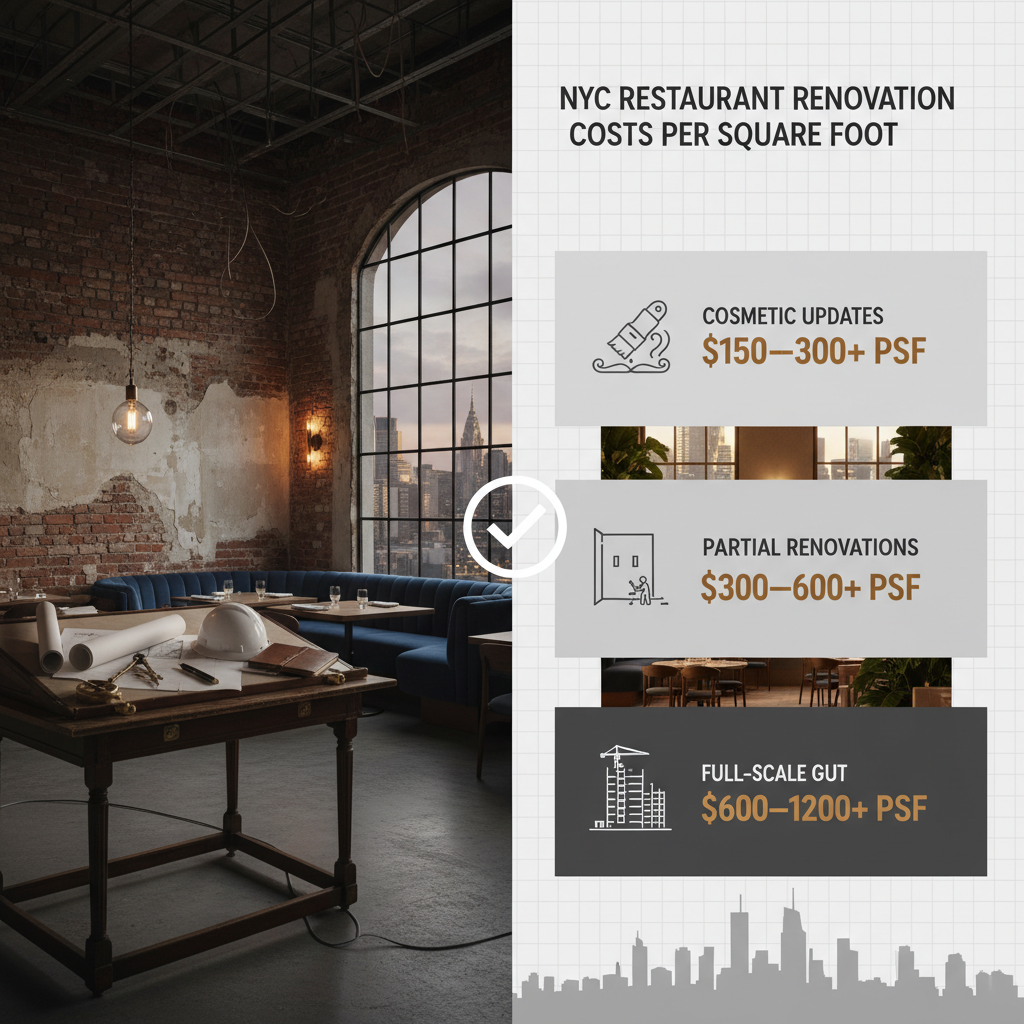
- Cost Per Square Foot (NYC Realities):
- Cosmetic updates: $150-$300+ per sq ft.
- Partial renovations: $250-$400+ per sq ft.
- Full gut renovations: $400-$800+ per sq ft, potentially exceeding $1 million for larger spaces or conversions.
- Contingency Fund: Allocate a 10-20% buffer for unforeseen issues.
Financing Your Renovation:
- Explore funding avenues: bank loans, SBA loans, private investors, personal capital.
- Develop ROI projections: demonstrate how the renovation will increase revenue, customer satisfaction, and operational savings.
Developing a Realistic Timeline:
- Phases:
- Pre-construction (Design & Permits): 3-9 months (often the longest in NYC).
- Construction (Demolition, Build-out, MEP, Finishes): 3-12 months for moderate to large restaurants.
- Post-Construction (Inspections, Training): 2-4 weeks.
- NYC Permit Delays: Factor in significant time for Department of Buildings (DOB) approvals.
- Minimizing Downtime: Implement strategies like phased renovations, off-hours work, or temporary closures during slow seasons.
Navigating the NYC Labyrinth: Permits, Codes, and Compliance
Strict adherence to NYC regulations is non-negotiable.
The Bureaucratic Balletto (Ballet):
- DOB & Zoning: Obtain DOB permits for all structural changes, alterations to Certificate of Occupancy, and new installations. Understand C of O, Letters of No Objection, and zoning impacts.
- Health Department Regulations: Comply with NYC DOHMH codes for grease traps, ventilation, sanitation, dishwashing, and storage.
- Fire Safety & ADA Compliance: Ensure adherence to fire safety regulations (egress, sprinklers) and Americans with Disabilities Act (ADA) accessibility standards.
Licensing & Inspections:
- Key Licenses: Food Service Establishment Permit (DOHMH), Liquor License (SLA), Sidewalk Cafe Permit, Signage Permits.
- Inspections: Prepare for pre- and post-construction inspections by DOB, DOHMH, and Fire Department.
- Documentation Management: Maintain meticulous records of all approvals, permits, and inspection reports.
Assembling Your Squadra (Team): Experts Who Get NYC renovations
A skilled team is crucial for navigating NYC's unique challenges and zoning.
The Architect's Role:
- Translate vision into buildable, compliant, and beautiful design; advocate and problem-solve; navigate NYC regulations and agencies.
General Contractor Selection:
- Choose a GC with proven NYC restaurant experience, verify licensing, check references, and scrutinize bids and contracts.
Specialized Trades & Consultants:
- MEP Engineers: For compliant HVAC, plumbing, and electrical systems.
- Interior Designers: For aesthetics, brand alignment, and guest experience.
- Kitchen Equipment Suppliers: For specialized, code-compliant commercial equipment.
- Other Consultants: Structural engineers, sound consultants, lighting designers as needed.
Communication & Collaboration:
- Foster clear, consistent communication among all team members for seamless project execution.
The Art of Space: Design, Layout, & Functionality
Transforming space into an inspiring and practical experience.
Front-of-House (FOH) Transformation:
- Ambiance & Aesthetics: Incorporate trends like biophilic design, flexible spaces, integrated technology, and "Instagram-worthy" elements. Utilize natural materials and artisanal finishes.
- Flow & Comfort: Optimize seating for capacity and movement, ensuring staff and customer efficiency and ADA compliance.
- Lighting & Acoustics: Use strategic lighting to set the mood and acoustic treatments to manage noise.
- Material Selection: Choose durable, aesthetically pleasing, and easily maintainable finishes.
Back-of-House (BOH) Efficiency:
- Kitchen Layout & Workflow: Design for maximum efficiency, minimizing steps and creating clear zones.
- Equipment Integration: Strategically place commercial-grade equipment for optimal performance and compliance.
- Storage & Organization: Maximize space with smart storage solutions.
- MEP Considerations: Ensure adequate ventilation, exhaust, plumbing, and electrical capacity.
Restroom Revitalization:
- Focus on cleanliness, modern fixtures, proper lighting, and strict ADA compliance for a positive customer impression.
VI. The Grand Reveal: Reopening, Marketing & Long-Term Success
Ensuring a spectacular debut and sustained success.
Final Inspections & Certification:
- Conduct walk-throughs, complete punch lists, and obtain final approvals from DOB, DOHMH, and the Fire Department.
Staff Training & Readiness:
- Train staff on new equipment, workflows, service standards, and emergency procedures.
Marketing the "New You":
- Pre-Opening Buzz: Generate excitement through social media, teaser campaigns, and press outreach.
- Grand Opening Event: Plan a memorable event to celebrate and attract customers.
- Digital Presence: Update website, social media, and online listings with new visuals and information.
- Loyalty Programs: Encourage repeat business with opening specials.
Post-Renovation Maintenance Plan:
- Establish a routine maintenance schedule for equipment and finishes, and continuously gather feedback for operational fine-tuning.
FAQ Section
Typical Cost Per Square Foot (NYC):
$150-$500+ per square foot (cosmetic to full overhaul), with kitchen renovations often reaching $800+.
Typical Timeline (NYC):
6-18+ months, including permit acquisition, design, and construction.
Critical Permits (NYC):
DOB permits, NYC Health Department permits, SLA liquor license, zoning, and fire safety compliance.
Minimizing Disruption:
Phased renovations, off-hours work, and clear customer communication.
Architect for Minor Refresh:
Recommended for any changes to layout, plumbing, electrical, or structural elements to ensure DOB approval and functionality.
Biggest NYC Challenges:
Navigating complex regulations (DOB, Health Dept.), tight spaces/logistics, high costs, and minimizing revenue loss.
2025 Design Trends:
Biophilic design, flexible spaces, integrated technology, experiential dining, and "Instagram-worthy" aesthetics.

LOSAI STUDIO