Sustainable Restaurant Design in NYC
From Foundation to Fixture
An architect's perspective on strategic investment in eco-friendly spaces.
This document outlines the creation of an HTML blog post focused on sustainable restaurant design in New York City, emphasizing a "foundation-to-fixture" approach that mirrors the farm-to-table movement. The author, an architect with 20 years of experience in NYC design, argues that sustainable design is a strategic investment, not just an aesthetic choice, offering tangible benefits for restaurateurs.
Key Themes and Arguments
- Farm-to-Table to Foundation-to-Fixture: Extending the philosophy of sourcing local, fresh ingredients to the physical restaurant space, using sustainable and reclaimed materials.
- Diner Experience: Modern diners seek authentic experiences aligned with their values, including environmental consciousness. Sustainable design attracts and retains these customers.
- Brand Enhancement: A commitment to sustainability strengthens brand identity, communicates forward-thinking values, and creates a unique, memorable space that generates buzz.
- Cost Savings & Durability: Sustainable design leads to long-term operational savings through energy and water efficiency, and the use of durable materials reduces maintenance and replacement costs.
- Environmental Responsibility: Reducing environmental footprint is a direct benefit, potentially opening doors to incentives and certifications.
Benefits of Eco-Friendly Design
Enhanced Guest Experience & Customer Attraction:
- Meeting Demand: Caters to the growing segment of eco-conscious diners in NYC.
- Healthy Environment: Utilizes low-VOC paints and finishes to improve indoor air quality.
- Compelling Storytelling: Reclaimed materials (e.g., salvaged wood, upcycled decor) provide authentic narratives that engage customers.
Tangible Cost Savings & Durability:
- Energy Efficiency: LED lighting, smart HVAC, and maximizing natural daylighting significantly cut utility bills.
- Durability: Sustainable materials like reclaimed wood and polished concrete are often more resilient in high-traffic restaurant environments, reducing repair and replacement costs.
- Reduced Environmental Impact: Conserving resources and lowering carbon footprint can lead to financial incentives.
Strengthening Brand Identity & Long-term ROI:
- Global Trends: Aligns the restaurant with the growing global movement in sustainable hospitality.
- Customer Loyalty: Genuine commitment to sustainability builds trust and fosters repeat business.
- Unique Spaces: Creates buzz and organic media attention through distinctive, story-rich environments.
Sustainable and Reclaimed Materials
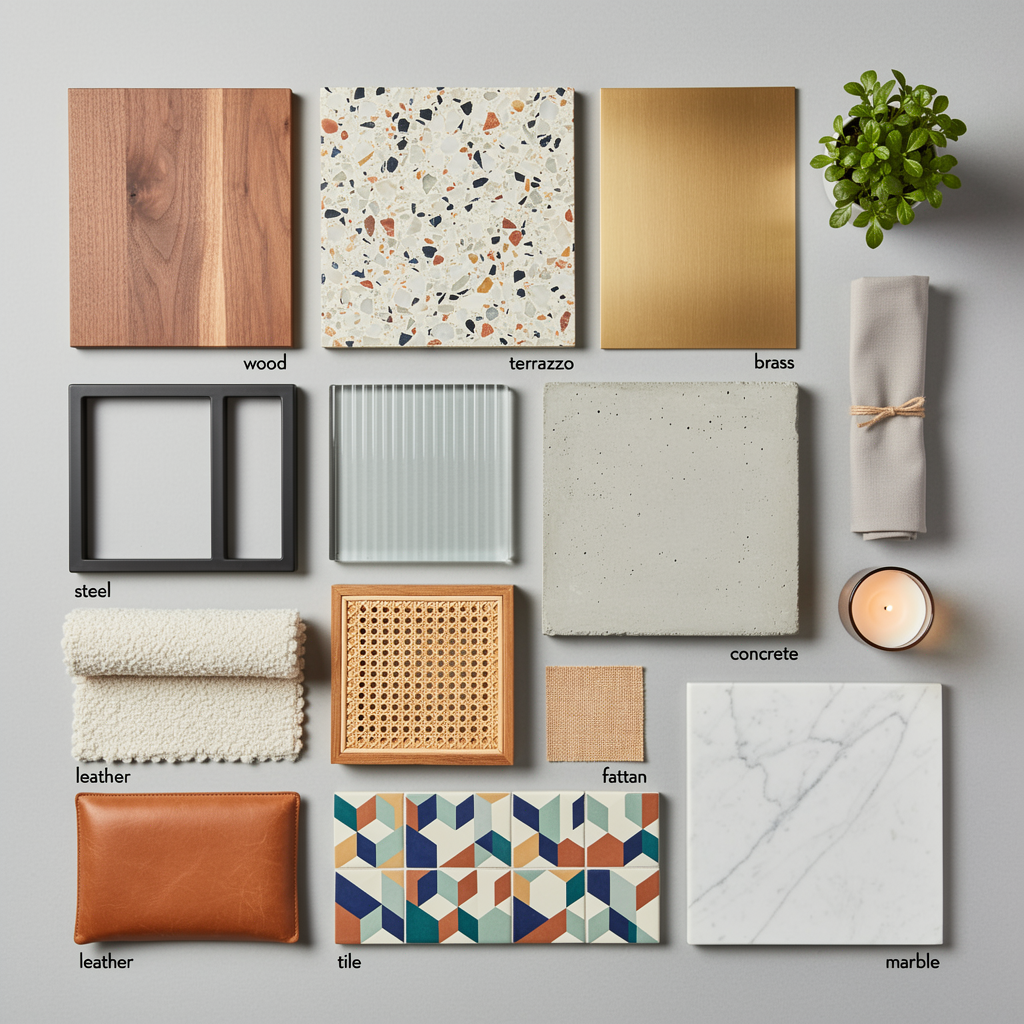
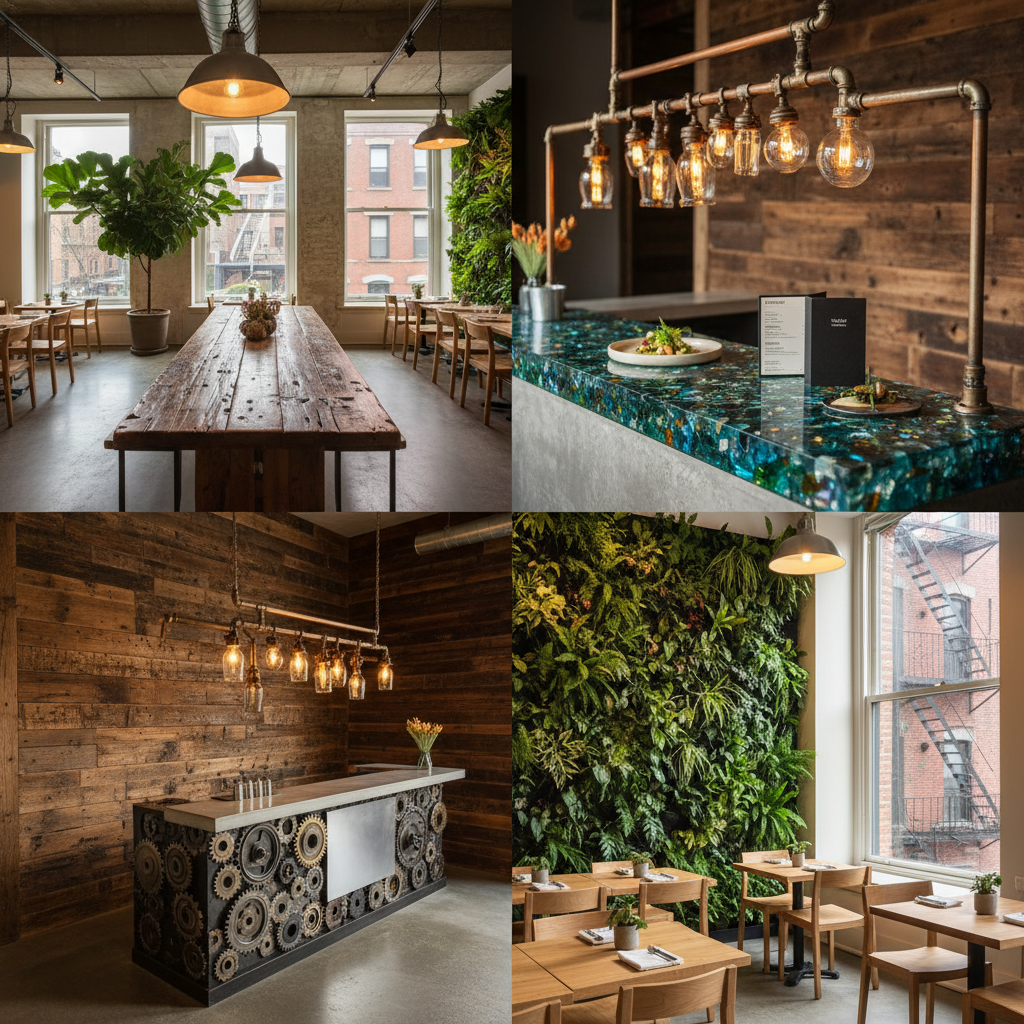
Reclaimed Wood: Offers character, history, and durability; reduces demand for new lumber. Applications include furniture, flooring, accent walls, and bar tops.
Bamboo: Highly renewable, strong, lightweight, and durable. Used for flooring, wall coverings, tabletops, and furniture.
Recycled Glass: Aesthetically appealing, available in various colors, and diverts waste from landfills. Used for countertops, backsplashes, and light fixtures.
Cork: Renewable (harvested from bark), antimicrobial, sound-absorbent, cushioning, and insulating. Used for flooring and wall coverings.
Recycled Metal/Steel: Durable, strong, and offers an industrial aesthetic. Reduces demand for raw ore mining. Used for structural elements, bar fronts, light fixtures, and seating.
Exposed/Polished Concrete: Durable, low-maintenance, and offers a minimalist aesthetic. Often utilizes existing structures, minimizing waste. Used for flooring, countertops, and architectural features.
Low-VOC Paints and Finishes: Crucial for a healthy environment by reducing harmful chemical emissions. Used on all painted surfaces and finishes.
Natural Stone (Responsibly Sourced): Timeless elegance and durability. Emphasis on ethical sourcing and minimizing transportation impact. Used for countertops, tabletops, and accent walls.
Innovative Options (Sorghum Panels): Lightweight, durable, and sustainable alternative to wood products, made from a rapidly renewable crop. Used for furniture and wall panels.
Holistic Sustainable Design Principles
- Biophilic Design: Connecting diners with nature through natural light, ventilation, plants, green walls, and natural forms/textures to enhance well-being and ambiance.
- Upcycling and Repurposing: Creatively reusing discarded items to reduce waste and create unique, character-rich pieces (e.g., industrial elements for lighting, old doors for tabletops).
- Energy and Water Efficiency: Implementing smart technologies like high-efficiency HVAC, smart thermostats, LED lighting, and water-saving fixtures (low-flow faucets). Rainwater harvesting is also mentioned as a possibility.
- Waste Reduction and Management: Designing for minimal operational waste, incorporating on-site composting systems, and clear recycling zones.
- Locally Sourced Materials and Suppliers: Minimizing transportation emissions, supporting local economies, and finding unique regional items.
Data and Technology in Reclaimed Material Sourcing
- Material Passports and Digital Inventories: Digital records detailing a material's origin, properties, and potential for reuse, enabling informed decision-making and "design by availability."
- Life Cycle Assessment (LCA): Quantifying the environmental impact of materials from cradle to grave to reduce embodied carbon.
- Optimized Sourcing and Supply Chains: Using AI and big data platforms to track, identify, and manage salvaged materials efficiently, reducing costs and logistical complexities.
- Meeting Consumer and Regulatory Demands: Data-backed sustainability claims build trust with consumers and help meet evolving green building standards and regulations.
NYC-Specific Challenges and Innovations
- NYC Department of Buildings / Zoning: Navigating permits, approvals, and compliance with local codes, fire safety, and accessibility regulations is critical.
- Space Constraints & Logistics: Limited space necessitates multi-functional materials and precise installation. Sourcing and delivering large reclaimed items requires meticulous planning and coordination.
- Budget as a Catalyst: While upfront costs may vary, long-term savings and the added value of unique character justify the investment. Reclaimed materials can offer budget-friendly aesthetic solutions.
- Demanding NYC Consumer: Sophisticated diners appreciate genuine sustainability, making it a powerful marketing differentiator.
Ready to Transform Your Restaurant?
As an experienced principal architect with over 20 years in NYC, I offer concierge-style service to guide restaurateurs through the process of creating sustainable, purposeful, and personality-driven restaurants, from concept to permits. My knowledge of the city, codes, and budget management ensures a smooth and successful journey.
Frequently Asked Questions
What are the benefits of sustainable materials in restaurant design?
Reduced environmental impact, attracting eco-conscious diners, cost savings (durability, energy efficiency), enhanced brand image, and customer loyalty.
What are some popular reclaimed materials for restaurants?
Reclaimed wood, recycled glass, cork, and recycled metal/steel are highly popular choices.
Beyond materials, what else contributes to an eco-friendly restaurant?
Biophilic design, energy/water efficiency, waste reduction/management, and locally sourced materials are crucial for a holistic approach.
What is Biophilic Design?
Connecting diners with nature through natural light, ventilation, plants, green walls, and natural forms/textures to enhance well-being and ambiance.
Can sustainable design actually save money?
Yes, through reduced energy consumption, lower maintenance costs due to durable materials, and increased customer attraction and loyalty.
How does data and technology help in sourcing reclaimed materials?
It enables optimized sourcing, efficient supply chains, material passports, and Life Cycle Assessments (LCAs) for informed choices and reduced embodied carbon.
What are the unique challenges of sustainable design in NYC?
Navigating NYC Department of Buildings/Zoning regulations, managing space constraints and complex logistics, and meeting the demands of discerning consumers are key challenges.
LOSAI STUDIO