Building a Stunning and Sustainable Restaurant with Salvaged Materials
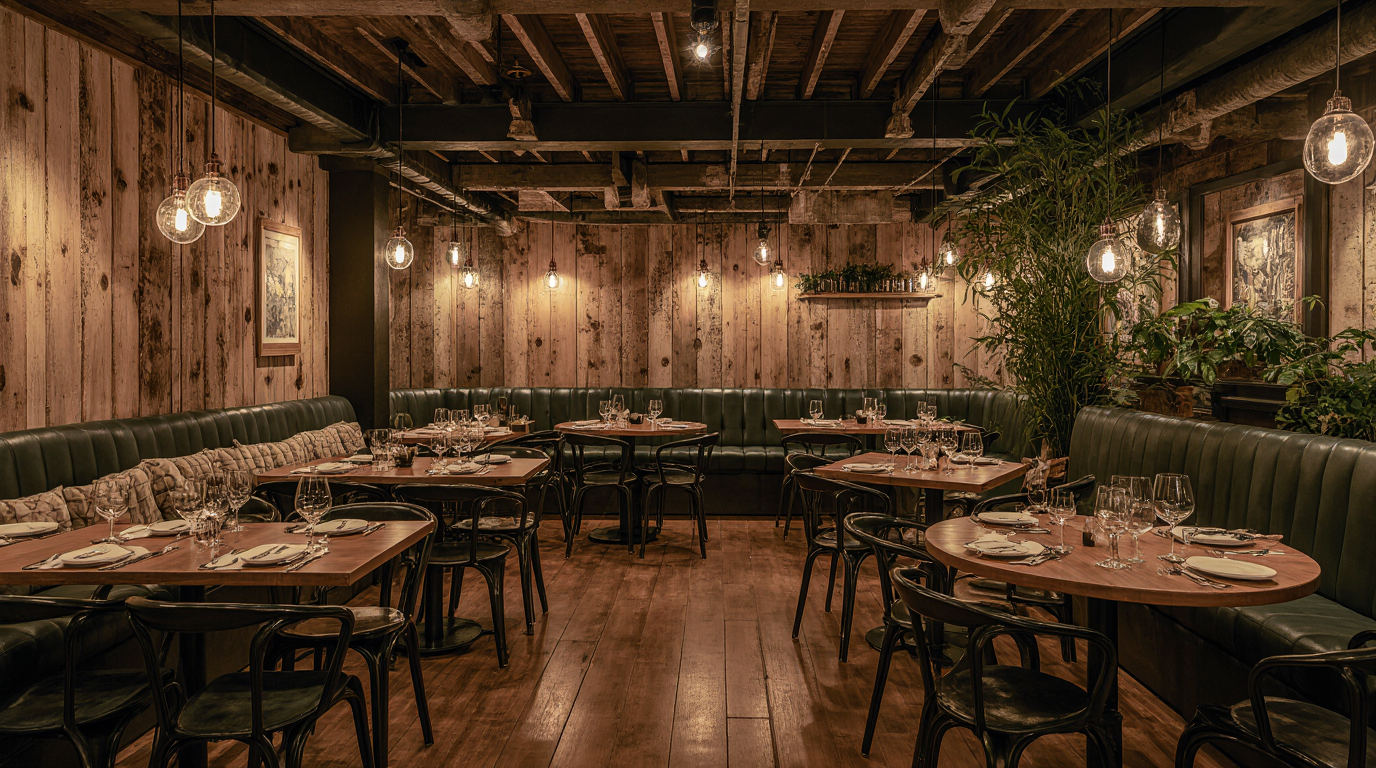
The historical precedent of reuse, the benefits for designers, restaurateurs, and customers, details common salvaged materials, addresses potential challenges, and outlines future trends in sustainable dining.
Reimagining Restaurants Sustainably
The goal is to create visually appealing restaurants with historical character without excessive cost, while also being environmentally responsible. This approach involves using salvaged materials like reclaimed wood and industrial metal to craft unique designs that tell a story and reduce environmental impact. It emphasizes creating an authentic experience where the past informs the present.
A History of Reuse
Resourcefulness and recycling are deeply ingrained in human history.
- Ancient Romans: Used crushed pottery shards to strengthen concrete.
- Early Paper Recycling: Driven by necessity, old parchments were given new life.
- Great Depression: Repurposing became a vital survival skill, influencing restaurant adaptations.
- Mid-20th Century: Marked by material abundance.
- Late 20th & Early 21st Centuries: A resurgence of salvaged goods, driven by ecological consciousness and a desire for soulful spaces.
Why Salvaged Style is Gaining Traction
For Designers:
- Creative Playground: Imperfections and marks of time offer unique design opportunities, leading to inimitable spaces.
- Storytellers: Designers weave historical narratives into the restaurant's fabric, creating authenticity.
- Durability and Character: Salvaged materials are often more robust and intriguing than modern alternatives, possessing resilience and etched character.
For Restaurateurs:
- Eco-Cred: Enhances brand image by signaling a commitment to sustainability and responsible practices.
- Budget-Friendly Brilliance: Potential long-term savings on materials and energy consumption, possibly up to 30%.
- Attracting the Green Crowd: Appeals to an increasing segment of diners who prioritize eco-conscious establishments.
For Customers:
- Authenticity is Key: Offers a genuine experience and a tangible connection to the past, contrasting with synthetic and mass-produced environments.
- A Story with Every Bite: Embedded history sparks conversation and enhances the dining experience.
- Happy to Pay More: Consumers are increasingly willing to pay a premium for "green dining" experiences.
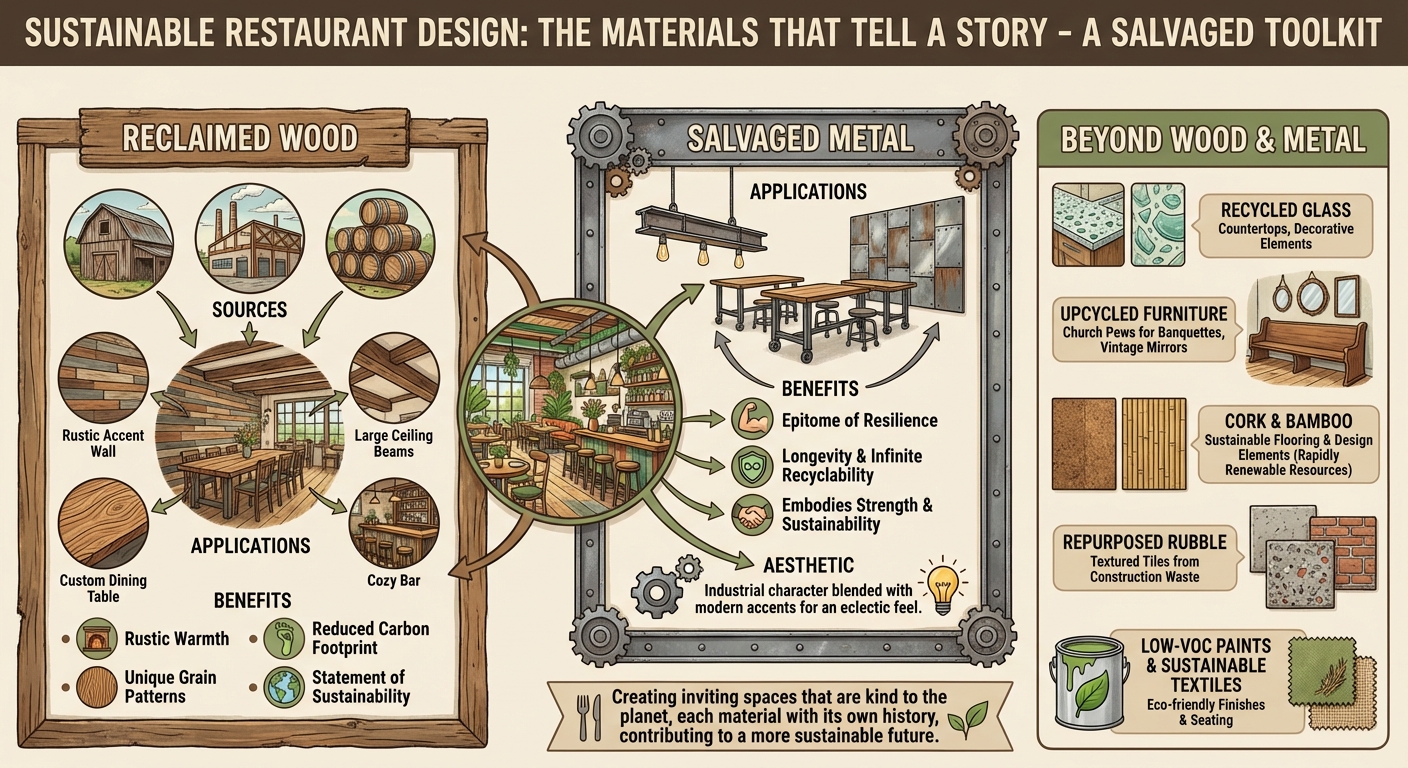
The Materials That Tell a Story: A Salvaged Toolkit
Reclaimed Wood:
- Sources: Old barn wood, factory timber, repurposed wine barrels.
- Applications: Accent walls, custom tables, ceiling beams, bar areas.
- Benefits: Rustic warmth, unique grain patterns, reduced carbon footprint, statement of sustainability.
Salvaged Metal:
- Applications: Lighting fixtures from steel beams, tables from industrial rolling bases, accent panels.
- Benefits: Epitome of resilience, longevity, infinite recyclability, embodies strength and sustainability.
- Aesthetic: Industrial character blended with modern accents for an eclectic feel.
Beyond Wood and Metal:
- Recycled Glass: Countertops, decorative elements.
- Upcycled Furniture: Church pews for banquettes, vintage mirrors.
- Cork & Bamboo: Sustainable flooring and design elements (rapidly renewable resources).
- Repurposed Rubble: Textured tiles from construction waste.
- Low-VOC Paints & Sustainable Textiles: Eco-friendly finishes and seating.
The Rough Edges: Potential Pitfalls and Considerations
Sourcing Scrutiny:
- The Hunt: Requires time, dedication, and a keen eye; architectural salvage yards and demolition companies are key sources.
- Material Verification: Essential to avoid hazards like lead paint or wood-boring insects.
Safety First (Always!):
- Hidden Hazards: Vigilance for lead, insecticides, mold, and bacteria. Materials must undergo proper treatment (e.g., kiln heating).
- Structural Soundness: Professionals must inspect old wood or metal for structural integrity.
- Food Contact Fails: Porous materials like untreated wood are unsuitable for direct food contact due to health regulations.
Red Tape Rundown:
- Permits, Codes, and Health Department: Strict adherence to regulations for structural integrity, fire safety, and kitchen materials is required.
- Adaptive Reuse Hurdles: Converting existing structures may involve costly overhauls for plumbing, electrical, and kitchen layouts.
Cost vs. Consistency:
- Initial Expenses: Inspection, treatment, and specialized labor can add up.
- Consistency Challenge: Sourcing consistent batches of materials for large projects can be difficult.
Trends in Reclaimed and Sustainable Dining
- Circular Economy Revolution: Designing for zero waste, where materials are reused, repaired, or recycled.
- Smart & Green Tech: Integration of smart lighting, energy-efficient HVAC, solar panels, and water conservation systems.
- Biophilic Boom: Incorporating living walls, vertical gardens, and maximizing natural light for well-being.
- Hyper-Local Everything: Increased focus on sourcing materials and ingredients locally to reduce emissions and support communities.
- Certifications Matter: Growing demand for materials with recognized eco-certifications (e.g., FSC, C2C) for transparency.
- Beyond the Plate: Sustainability will encompass the entire restaurant lifecycle, from design to waste management and vendor partnerships.
Your Story, Sustainably Built
Salvaged materials offer a powerful method for constructing restaurants that are aesthetically unique, cost-effective, and environmentally responsible. Embracing these materials allows for the creation of a restaurant with inherent character, significant cost savings, and a demonstrated commitment to environmental stewardship.
LOSAI STUDIO